
What’s at stake with who you’re hiring

Our claims professionals are always looking out for the best interests of all parties along the insurance process. While the following issue has not risen to the status of a claims trend, it is alarming due to the potential for a nuclear verdict.

Knowing what’s at stake by hiring a driver to work for you is something both you and your insurance professional should have discussed. However, when a carrier goes against the advice of that professional and/or operates contrary to the stipulations in their insurance contract, they are creating additional exposure that could lead to a claim of negligence.

A claim for negligent entrustment arises when one party is held liable for negligently giving someone else a “dangerous instrumentality” with which that person causes injury to a third party. This could be interpreted as an employer entrusting a driver with a vehicle with which that driver isn’t operating responsibly. It could also be interpreted as an employer allowing a driver to operate their vehicle that the driver is not qualified to operate.

A claim for negligent hiring arises when an employer knew or should have known of an employee’s potential risk to cause harm, or if the risk would have been discovered by a reasonable investigation.

Please review the scenarios below that could be labeled as irresponsible and create unnecessary exposure.

• Do you have drivers (often part-time) delivering your loads that your insurance company does not know about? You should be notifying your insurance agent about all your drivers. Your agent knows your policy better than you and if there is an issue with that driver or the policy, they will notify you of the risk or help to deal with that exposure.
• Are your drivers allowing passengers to ride along in their vehicle during on-duty time? Many commercial insurance policies have exclusions for passengers, most notably family members. If you’re not sure, ask your agent before allowing passengers and instruct your drivers accordingly.
• Do your drivers have the proper license type to operate your vehicles and is it valid? Obtaining MVRs at least annually for your drivers is a legal requirement to stay compliant with FMCSA guidelines. However, anything can change within a year, and verifying the validity of those licenses periodically is just good business practice. Drivers don’t always self-update with changes.
• Are your driver’s medical cards current? This is something to stay on top of. Should your driver have a medical event while driving that would have excluded them from being behind the wheel, you could have a claim that will quickly escalate.

You and your insurance professionals are on the same team and need to be on the same page with your operational exposure. If you are ever in doubt about coverage, don’t just chance it, give them a call.
Latest Claims Trends

It is our intent to regularly inform you of trending claims affecting our insureds. Having examined our most recent claims data, our analysts have detected two trends that need attention.

First, our claims handlers have been receiving claims where other vehicles have been crashing into our insured’s vehicles. Secondly, rear-end crashes persist as a chronic claim.

In situations where another vehicle collides with yours, it is imperative that you document as much about the crash as possible. Due in large part to a trucker’s liability limits being significantly higher than 4-wheel motorists, the industry is under assault by fraudulent individuals/groups and attorneys dedicated towards acquiring and litigating trucker claims regardless of fault.

In documenting the scene, you should be photographing all angles of the crash including the area of impact. Be sure to photograph signs, license plates of vehicles involved, the intersection, and skid marks. Try to do this while maintaining relativity to the crash area. Additionally, seek out names and numbers of any witnesses and be sure to take time to write down your account of the incident.

With respect to rear-end crashes, these crashes are chronic and should continue as a hot topic discussion at driver meetings. Below are some tips to reducing this type of crash.

If you are in a rush, you will likely be driving too fast for conditions or too close to be able to stop in time to avoid a collision. Maintain space between you and the vehicle ahead of you. A 3-second cushion should be minimum at higher speeds. Maintaining this cushion is very important due to motorists merging unexpectedly and braking quickly.

Distractions can take your attention from the road. A loaded semi traveling at 60 mph will travel 88 feet per second and need roughly 500ft to fully stop. At that same speed a 4-wheel motorist can stop in around 200ft. Minimize your distractions and keep focused on the road.

Hit & Run – was it you

We have coached you before that when you are involved in a crash, safely pull over to evaluate and secure the scene, exchange information and take photographs. But what if you didn’t know you were involved in a crash.
Driving an 80,000 lb tractor trailer combination on today’s busy roads is a challenging task. So much so, it requires a licensed professional to do so – even then accidents happen. So what should you do if after a couple miles you are pulled over and told you were involved in a crash that you have no knowledge of. Not only involved, but now are being accused of leaving the scene of an accident.
Believe it or not it’s not so uncommon of an occurrence where a truck clips something like a tree, fence or even a vehicle without knowing – especially when turning. For me, having an office on the 3rd floor near a freeway where big trucks frequent is an awakening experience. You regularly feel the rumble of the truck’s mass and weight coming down the street followed by the jarring sounds of the trailers lifting and falling back onto their couplers.
Being inside the cab with that going on can certainly mask an event as mentioned above. Being accused of leaving the scene of an accident is very serious. Being convicted of that is far worse. Hit and Run involving property damage or injury/death can be charged as a misdemeanor or felony depending on the seriousness of the circumstances involved. A conviction of a hit and run is an automatic one year disqualification of your commercial operating license for the first offence and disqualification for life for a second offence.
If you receive a ticket for leaving the scene, you’re going to need counsel and you will likely appear before a judge. The ticket is the driver license side of things, but there is also a criminal side that deals with intent.
The general standard for intent is, did you or did you not know that you hit something and left the scene and/or should you have known that you hit something being a professional driver with your experience, your particular vehicle and load.
Evidence helps. Just because you are accused of being involved in a crash, doesn’t mean you were. Inspect your truck for any markings/damage consistent with what is being alleged and always take pictures. In one case, our insured was able to provide his load ticket and GPS tracking for the day in question which proved he wasn’t in the area at the time of the crash. So taking note of the time can be very important.
The bottom line is that any time you notice something abnormal, you should make an effort to check it out. It may be nothing or there could be an issue with your vehicle that could create a bad situation or worse. The point is not to dismiss a potential warning sign. Like the Boy Scout motto reads “Be Prepared” and their slogan that reads “Do a good turn daily”. For you drivers, those daily turns are very important.

California AB5 Update

The California Trucking Association’s case against California’s Independent Contract rule (AB5) has taken a big hit.

In April, the U.S. Court of Appeals for the Ninth Circuit ruled 2-1 to remove the current preliminary injunction against AB5. Following that ruling, the Association filed a petition to the U.S. Supreme Court. The Supreme Court, instead of making a decision to hear the case, asked the U.S. Solicitor General to weigh in. After months of silence, the Solicitor General has returned with the conclusion that AB5 would not have a significant impact on prices, routes or services and that further review is unwarranted.

This is not just a California issue. As noted in CTA’s brief to the Supreme Court: AB-5 applies to all drivers while operating in California including those from out-of-state. Accordingly, AB-5 would require all carriers and their drivers to comply with California’s laws for employees. AB-5 therefore would obligate carriers to either — use an employee driver for the entire trip (even if the driver could lawfully operate as an owner-operator in other states) or — incur the expense and delay of transferring the freight to a truck driven by an employee when the freight enters California or to a truck owned by an owner-operator when the freight leaves California. The government makes no attempt to explain how this problem could be addressed.

It is unclear whether or not the Supreme Court will still hear the case or take the advice of the Solicitor General and let the Ninth Circuit’s ruling stand. If the Supreme Court denies review, AB5 will be implemented in the state’s trucking sector immediately. Should the Supreme Court choose to review the case, there is no timeline for completion.

Summer adjournment is at the end of June, but there is no guarantee that the court will make a decision by that time. In that case, a decision would carryover into the next court session which begins in October.

New CCIA Gear!

Trucking t-shirt

Have you received your new CCIA t-shirt yet?

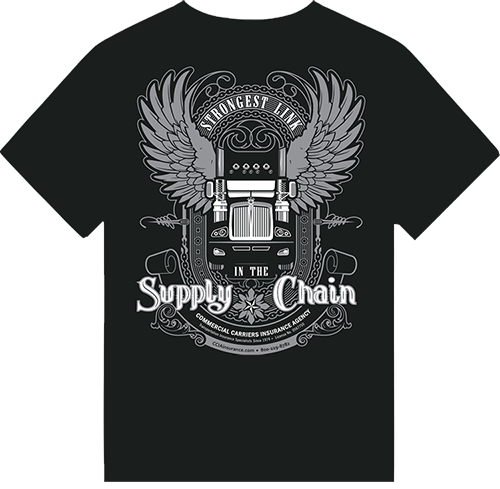
The CCIA team came up with a new design this year that highlights the theme of the nation’s supply chain. The title of the shirt is “Strongest Link In The Supply Chain”. The tri-tone design shows a class 8 tractor emerging from the center of a black shirt surrounded by chains. The tractor is adorned with wings symbolizing the free movement of goods that are carried throughout the nation.  We hope you enjoy it!

Every year, the CCIA team produces a different shirt design and distributes them to its clients. These are typically sent in XL, contact your agent for a different size. We’d love to know what you think about the shirts and are open to ideas for next year’s design.

Vehicle Prices Creating Big Insurance Gap

Truck Insurance Gap

If you’re looking to buy a new truck right now, you’re likely aware that there’s a supply and demand problem. The supply problem is with parts and how long the problem will last is unknown. So, if you really need that new truck right now, you may be in a tough spot and forced to pay more for it – a lot more. While a used truck will cost you less, relatively speaking, current used truck prices are shockingly high as well.
Because of the ongoing delays with new vehicles, used vehicles have been in high demand leaving fewer of them available. And the ones that are available are being sold at premium prices.
That brings me to our first concern. With regards to your Physical Damage insurance coverage, it’s likely that you are covered for an amount that was determined by “you” before the recent supply issue. This would likely have been a conversation with your agent asking you “how much could you purchase your truck for right now?”. If your vehicle is totaled in a loss, you will be indemnified based on the lesser of the amount you previously valued it at, or the actual cash value using comparables on the market. Because of the current spike in prices, you could be left paying a sizable amount out-of-pocket to find a replacement vehicle. Example: XYZ Trucking had a complete loss to their tractor that they valued at $20,000. Due to the recent supply and demand issue, the market value of that used tractor is now $30,000. XYZ Trucking will be indemnified up to the $20,000 valuation. Now, XYZ Trucking will have to pay an additional $10,000 out-of-pocket to purchase another tractor of like kind.
Our second concern is the problem with the parts supply. Due to the lack of availability with certain parts, repairs to your vehicle could take an indefinite amount of time. Because of this, your vehicle could potentially be deemed a total loss. This would once again put you in the above-mentioned situation of needing a significant amount of money out-of-pocket to find an acceptable replacement vehicle.
It may be time to revisit that valuation and upgrade your protection. Simply call your agent to discuss this important topic.

Business Cost Increase:

Minimum liability insurance increase to significantly burden truckers’

Liability Insurance Increase

According to the American Transportation Research Institute (ATRI) fleet insurance costs rose 12% between 2017 and 2018, the second fastest year-over-year growth rate. The Institute also found that, “Given the substantial insurance cost increases over the last several years, it appears that the industry has reached a ceiling in its ability to continuously cover annual double-digit increases in insurance premiums”.
AND… here we go again, yet another regulatory overreach and a potential significant insurance increase under the guise of safety. This one we’ve seen more than once before – but the numbers still don’t seem to support the need.

A provision to increase the minimum level of liability insurance for truckers has reappeared once again in the “INVEST in America Act” (H.R. 3864) – the House’s version of a surface transportation bill. The provision is gently titled “Updating the required amount of insurance for motor vehicles”. The “Update” would require the minimum amount of insurance for motor carriers to be raised from $750,000 to $2,000,000 (167%) and to be adjusted for inflation every 5 years.

Supporters of the legislation claim that the increase is modest and necessary as it has not been increased since implemented in the 1980s.

The numbers:
In 2018, FMCSA data shows that there were approximately 560,000 crashes with large trucks and buses. Of those, 77.5% were property damage only, 21.6% were injury-related and 0.8% were fatal occurrences. Of those crashes, it is estimated that 0.6% may have not provided enough insurance to adequately compensate the other party(ies).It is unclear where the safety benefit comes into play with this “Update”, but supporters of the legislation point the finger at insurers for not better qualifying carriers. They allege that at higher liability levels, insurers would have more at stake and could be incentivized to make greater efforts to screen out unqualified carriers and adjust insurance rates accordingly. The assumption being that in doing so, they would price the bad carriers off of the roads.

Those in favor of the legislation also point to a 2013 report by the DOT which concluded that “at current levels, liability insurance does not appear to be functioning effectively as catastrophe coverage”. Notwithstanding those arguments, opponents of the legislation claim that doubling and tripling of the minimum insurance requirement is arbitrary and dangerous and would dramatically drive up insurance premiums that would likely cripple many carriers, increase delivery rates which increase the cost of goods to consumers with little to no safety benefit. Additionally, they allege this effort is less about safety and more about the support trial lawyers have in Congress.

In a June 9 full committee markup of the legislation, there was an amendment to strike the insurance provision introduced by Rep. Mike Bost, R-Ill. The amendment failed a voice vote and a recorded vote was requested which also failed 38-30. If you’re not familiar, after an amendment to strike a provision is presented, there is a voice vote that is judged by level of sound (who was the loudest). In this meeting all votes fell mostly along party lines, i.e. regardless of sound the Democrat chair struck down the amendment.

The 19-hour hearing ended with the committee approving the five-year, $547 billion INVEST in America Act. The bill was sent to the House floor for further consideration. Be sure to contact your Representative and give your feedback on this very important issue.

DASHCAM VIDEO Renders Eyewitness Incompetent

Video evidence emerging as trump card in lawsuits

Consider this, you’re driving down the road and you hear a loud noise. A motorist just crashed into the back of your truck and was killed. Eyewitness testimony states that you swerved out of your lane and into the motorist’s lane putting you squarely at-fault for the crash. If it goes to trial, it’s highly likely that a jury will find you responsible for the crash and award policy limits to the claimant. If you’re a driver of a larger company, the award could be in the hundreds of millions.

This is a real and active scenario playing out in the state of Florida (Wilsonart, LLC vs the estate of Jon Lopez). However in this case the truck driver had a dashcam that was recording at the time of the crash which contradicts the eyewitness testimony.

In-vehicle dashcams are becoming more commonplace with private motorists and commercial truckers should be weighing the decision to do the same. We’ve all seen first-hand the ability of video evidence (VE) to change/shape opinions such as with the high-profile death of George Floyd and they can help in accident scenes (like the one above) as well.

Evidence in a courtroom is what wins cases and VE is the Ace in the deck. VE can show and often prove fault or innocence instead of simply your word against theirs or in this case false testimony. VE cuts down on fraudulent claims that increase premiums, hurt your loss ratio and your ability to work. VE can also give your insurance company added reason to fight your case in court rather than simply settling the claim without a trial.

In the case above, the judge initially handed down summary judgement (without a trial) in favor of the trucker because of the VE. The dashcam video was presented showing that the driver maintained a straight line of travel and did not swerve into another lane rendering the eyewitness testimony as incompetent evidence. The judge later reversed his decision based on an appeal by the Lopez estate claiming a jury should decide the legitimacy of their witness and expert testimony. However, in the absence of the VE, the trucker would have likely been found 100% at-fault.

This and many other scenarios can be challenged with VE and we feel you should have that tool in your toolbox. For less than $200 you can have a camera installed in your vehicle. Be sure that any camera you purchase has the ability to time/date stamp the video and offers a continuous recording feature. If you do install camera(s), be sure to take action on critical events. If you don’t utilize that data properly, lawyers can use that against you in court.
STAY SAFE!

Comprehensive Safety Program

The existence of your operation doesn’t just depend on profitability

So, your insurance company is pressing you about the details and contacts of your safety program. Do you roll your eyes and think, “Safety Program!!!”, “How can I make this go away so I can just drive and earn a living”, or do you have a meaningful plan in place? A comprehensive safety program is a must for mitigating losses and goes a long way towards portraying you as a responsible carrier that over time reduces the operational risk and protects employees.

From the ever-increasing cost of equipment to sophisticated insurance fraud rings and nuclear jury awards, insurance companies are finding it harder than ever to reduce the financial volatility of a claim. Because of this, it is imperative that you as a motor carrier have controls in place for closely managing the safety of your operation.

Insurance companies are in the business of transferring risk from you to them. How much risk they take is the variable, but it is not a guessing game. Every insurance company has a set of standards that create their preferred risk. Any deviation from that criteria makes you a less common risk and often a less desirable risk which could mean higher premiums, declination or cancellation/non-renewal of your policy(ies). Each at-fault claim that a motor carrier incurs raises the percentage of money paid in premiums compared to money the insurance company pays to settle those claims. Once the insurance company pays out an amount on the carrier’s behalf that exceeds their level of tolerance for that risk, they become less desirable and will surely incur repercussions.

An alarming trend over the past number of years has been the way law firms have used the advertising of large awards to solicit new clients. Especially how those firms portray the trucking industry as reckless and irresponsible. The insurance industry is all too familiar with the trend and is continuously looking for ways to slow the onslaught. The result of those awards materialise as raised premiums, cancelled/non-renewed policies, risk reduction and tighter risk selection by ensuring the client is as risk-free as possible and has a safety program in place.

A recent study by the Transportation Research Institute (ATRI) attempts to make sense of out-of-control jury awards against the trucking industry. Interviewees from the ATRI study generally concurred that the more safety activities motor carriers engaged in to prevent crashes the lower the likelihood that a nuclear verdict would result. It was also commonly noted that motor carriers typically do not allocate enough resources toward safety and crash prevention.

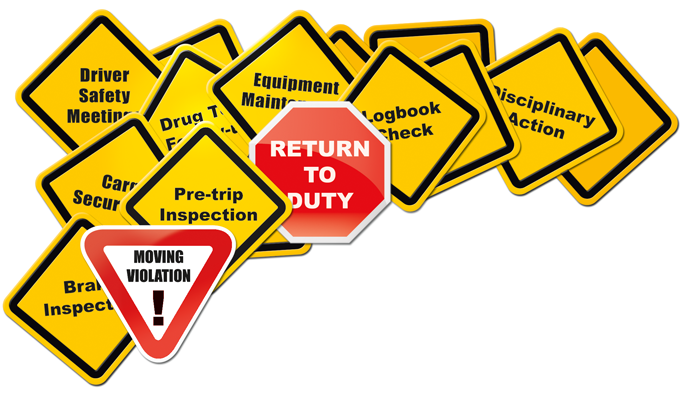
There are many factors that play a role in determining fault and awarding large payouts – many of which are out of the control of trucking companies. Nevertheless, motor carriers need to focus on those areas that they can control such as: meeting/exceeding FMCSRs, equipment maintenance, inspections, citations/violations, cargo securement, driver training, and properly maintaining log books.

Plaintiff attorneys will frame FMCSRs as minimum standards and juries are less forgiving when plaintiffs can document that additional reasonable steps to prevent a crash could have been taken, regardless of compliance with FMCSRs. The ability of defense attorneys to have documented safety activities that exceed FMCSRs carries great weight with juries. This also makes you a better risk in the eyes of an insurance company. According to the ATRI, a key strategy among plaintiff attorneys is to emotionally charge a jury against a motor carrier by painting them as careless and unsafe. However, a motor carrier that has not only met FMCSRs but exceeded them, reduces the ability of the plaintiff attorney to stigmatize them. This is where a safety program can validate responsible safety efforts.

A reasonable and responsible safety program should have appropriate, documented disciplinary actions. Per the ATRI study, in situations where there was any history of alcohol or drug use by the truck driver, it became much easier to convince a jury that the truck driver was at fault for the crash – even when the crash causal factors were unclear or tenuous. So, a responsible action might be to have documentation
that meets or exceeds what is expected before hiring or returning a driver to active duty following a positive test – regardless of time between the test and return to duty.

To begin drafting a safety program, begin by answering some questions you might be asked following a crash such as:

What steps have you taken to ensure your drivers are roadworthy?

What operational, safety or training factors could have prevented the crash from happening?

What actions have you taken following previous crashes?

Do you have training sessions/driver meetings?

Do you have a vehicle maintenance schedule?

Are your pre- and post-trip inspection reports handled properly?

Do you audit logbooks?

Are your inspections clean or are there patterns in violations?

Plaintiff attorneys are not paid by the hour but by the size of the award. Following a crash, you should expect that every aspect of your operation from maintenance to meal breaks will be scrutinized for the sole purpose of applying fault. Be proactive and have a comprehensive safety program in place. If you need help, contact your insurance agent or a loss prevention specialist.

Trying to get a good night’s sleep

sleep1In the trucking industry where there is a need for long periods of acute mental awareness during long stretches of physical inactivity, quality sleep is vitally important. From time to time we hear of incidents where sleep was related to a crash and we must not glaze over the seriousness of proper rest.

Most adults need 7-8 hours of sleep per night, although some need more or less sleep to be adequately rested. And when you have not gotten the right amount for your body, “oh boy” does it let you know. Well, sorry to say that there isn’t much that can take the place of a good night’s sleep to keep you alert. So, let’s first discuss what a good night’s sleep is and along the way talk about things to keep your alert level as high as possible while you’re awake.

Located in the brain is your body’s biological clock that tells it when it’s time to sleep and when to be awake. Your clock runs on a 24 hour cycle and regulates body temperature, alertness and the daily hormone cycles which stimulate cells into action. Disruption to any of the phases of the clock can cause physical and mental-related issues.

There are two main types of sleep, rapid-eye-movement (REM), and non-rapid-eye-movement (NREM). In most adults, sleep begins with the NREM phase. NREM sleep has three main stages. NREM begins with the 1st stage of gently dozing off until reaching the 3rd stage which is the “couldn’t wake you up with a bullhorn” stage of the NREM phase. In the progression from stage 1 to stage 3, brain waves slow and become more synchronized, and the eyes remain still. In the 3rd stage, the brain becomes less responsive to external stimuli, blood pressure and body temperature drop and muscles relax. The 3rd stage is where scientists believe physical and mental recuperation occur like protein building and hormone release. The NREM phase then reverses stages to a more awake stage 2 then stage 1 at which point the REM phase begins.

During REM sleep (aka “active sleep” state), muscles in the arms and legs are temporarily paralyzed, the slow brain wave sleep of NREM quickens as does your heart beat and breathing. The blood pressure rises and the eyes move around in all directions. Scientists believe these eye movements are related to dreams. REM can last from 5 to 30 minutes. NREM sleep and REM sleep continue to alternate throughout the night with the length of NREM stage 3 declining during each cycle. The average length of the NREM-REM sleep cycles are between 70 and 120 minutes.
Many of us have awake times that do not match our internal sleep clock which wants to be awake during the day and asleep at night. For those that do, you’ll have to work extra hard to get the sleep your body needs.

There are a lot of factors that affect the quality and quantity of sleep which include stress, what we eat and drink, medical conditions and the medications we take, the environment in which we sleep and the times at which we finally get to sleep. Any one of these can disrupt the depth of sleep we need so badly.

STRESS: Stress can stimulate an arousal response making restful sleep more difficult to achieve. Search out ways to help decompress e.g., exercise, yoga, music, deep breathing techniques, etc.

ALCOHOL: Alcohol can cause a person to fall asleep more quickly, but the quality of sleep will be compromised. Ingesting alcohol before bedtime has shown to cause increased awakenings due to the arousal effect the alcohol has as it is metabolized throughout the night.

CAFFEINE: A chemical called adenosine, which naturally builds in the brain during awake times is believed to inhibit brain cells that promote alertness. Hence, the longer we’re awake, the more sleepy we become. Interestingly, caffeine works to block the adenosine receptors of the brain allowing nerve cells to maintain activity. However, the more caffeine we ingest the longer it will take for the affects to wear off which can interfere with sleep cycles.

LIGHT: Exposure to light in the evening tends to delay the phase of our internal clock and leads us to prefer later sleep times. Bright light bulbs and electronic devices are common examples and should be minimized before bedtime.

PAIN: Pain and discomfort limit the depth of sleep we get. Those with chronic and acute pain should limit caffeine and alcohol consumption and practice stress reliving techniques. Use of pain killers and/or sleeping pills, while effective, should only be used under the supervision of a physician.

DRUGS: Many medications contain alpha and beta blockers used to control heart rhythms and reduce blood pressure both of which affect sleep. Talk to your doctor about the affects they may cause.

SLEEP ENVIRONMENT: Increase your chances of better sleep by controlling your sleep environment. 1) Use no/low lighting such as nightlights to minimize the effects on the internal clock; 2) Reduce noise that can prevent transitions to the deeper stages of sleep, and; 3) Maintain a comfortable temperature to avoid disruptive sleep; 4) Invest in quality bedding.

Driving without the proper amount of quality sleep makes it harder to pay attention to the road and dramatically impacts your reactions. Signs of drowsy driving are trouble focusing, heavy eyelids, an inability to remember the last stretch of road that you just drove, yawning constantly, bobbing your head, and drifting from your lane. If this starts to happen while you’re driving, find a safe place to pull over and take a quick nap or stretch, breath deeply and take a short walk, or buy a cup of caffeinated coffee to help keep you alert. STAY SAFE AND GET SOME REST!